
 by Scott Pendlebury
 17 August 2026
How Precision Roller Surfaces Reduce Waste and Production Downtime
Production waste is often blamed on raw materials, machine settings or operator error. However, worn, damaged or incorrectly profiled rollers can be an equally important cause. As rollers control pressure, grip, tension and material movement, even minor surface defects can create repeated problems across an entire production run.
Why Roller Condition Matters
A roller that has lost its correct shape or surface finish may pull material unevenly, creating inconsistent pressure. In textile production, this can lead to creasing, poor alignment, stretching and damaged fabric. Similar issues can affect printing, coating, laminating and packaging lines, where precise material handling is essential.
Industrial textile rollers must perform consistently under continuous operating conditions. Their covering material, hardness, diameter and surface profile all influence how effectively they guide or process the web. When these elements no longer match the application, the result may be higher rejection rates, slower production and more frequent stoppages.
Common Warning Signs
Operators should look for changes in product quality as well as visible roller damage. Uneven wear, cracking, glazing, swelling, scoring and loss of grip may all indicate that a roller requires attention. Other warning signs include increased vibration, tracking problems, irregular tension or the need to adjust machine settings more often than usual.
Identifying these symptoms early can prevent a small maintenance issue from becoming an expensive breakdown. A professional inspection can determine whether the roller needs recovering, regrinding, polishing, grooving or complete replacement.
Improving Grip and Material Control
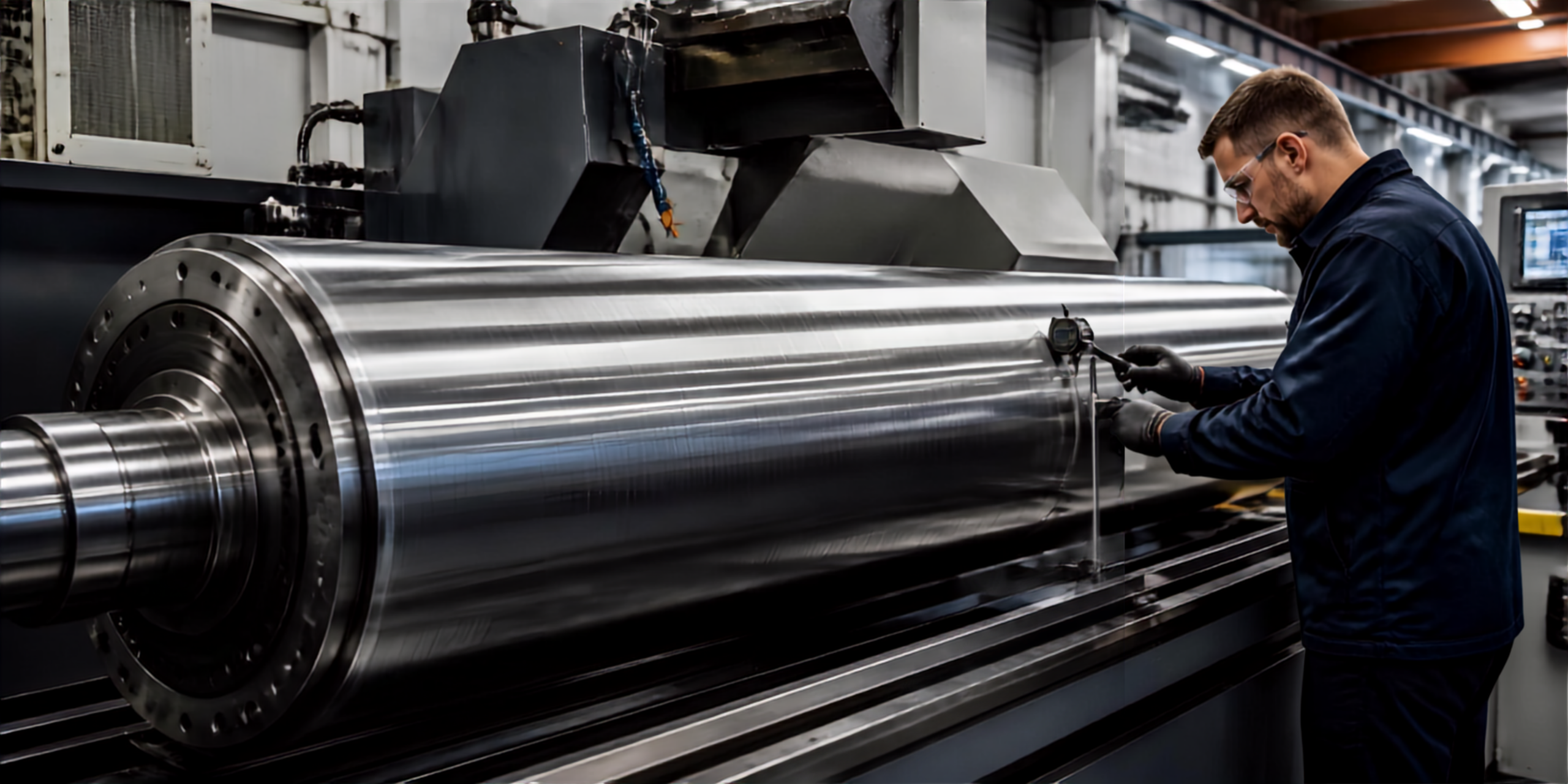
Taper grinding & grooving can help restore or improve the way a roller interacts with material. Different groove patterns and profiles can be used to increase traction, spread webs, control tension or guide material more accurately. Options may include spiral, chevron, diamond, crosshatch, radial or parallel grooves, depending on the machine and application.
A correctly engineered surface helps the roller perform its intended function without applying unnecessary pressure. This can reduce marking, distortion and slippage while supporting stable production speeds.
Refurbishment Versus Replacement
Replacing a roller isn’t always the most economical solution. In many cases, the existing core or cylinder can be refurbished and fitted with a new rubber or polyurethane covering. The surface can then be ground and finished to the required dimensions and profile.
Refurbishment can reduce costs, shorten lead times and extend the service life of valuable components. It also provides an opportunity to review whether the original roller specification still suits the current process. Changes in materials, production speeds or operating conditions may mean that a different compound, hardness or surface pattern would perform better.
Reducing Downtime Through Planned Maintenance
Regular inspections and timely maintenance help prevent roller wear from developing into costly production problems. Well-maintained industrial textile rollers support controlled material handling and consistent output, while specialist taper grinding & grooving can restore the precise profile required for dependable operation. With the right maintenance strategy, manufacturers can extend roller life, reduce waste and keep production running efficiently over time. This supports reliable performance across demanding industrial applications.
 العربية
  English (UK)
  Français du Canada
  বাংলা
বাংলা  Deutsch
  हिन्दी
  Italiano
  Português
  Русский
  Español
  Türkçe
  简体中文
简体中文  Română